
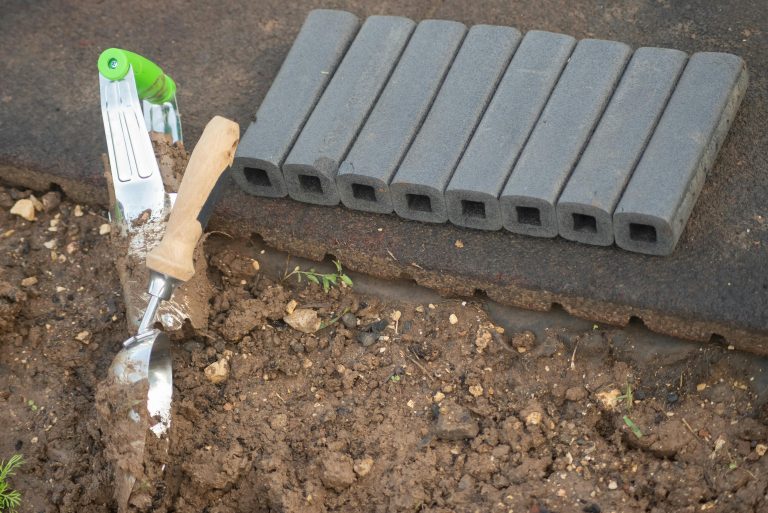
Thinking about laying pavers without a base?
It’s one of the most common DIY questions homeowners ask.
Skipping the gravel and sand layers feels like a faster, cheaper way to install pavers, but it comes with trade-offs.
While it’s possible to put pavers directly on dirt or grass, they won’t hold up as well over time.
Let’s look at when it can work, what the risks are, and the smarter alternatives that can save you money and headaches later.
What Does “Without Base” Really Mean?
A standard paver installation includes compacted gravel, a sand layer, and then the pavers.
This creates stability, supports weight, and allows water to drain.
Laying pavers without base means putting them directly on compacted soil, dirt, or grass.
Some DIYers do this for quick garden paths, stepping stone walkways, or budget-friendly projects.
Why a Base Matters for Pavers
There’s a reason professionals almost always recommend using a base:
- Stability: A proper base keeps pavers from shifting or wobbling underfoot.
- Drainage: Without it, water collects underneath and causes erosion.
- Longevity: Bases prevent weeds, sinking, and cracking, making pavers last longer.
Risks of Laying Pavers on Dirt
Can you install pavers without gravel?
Yes.
Should you?
Not always.
Here’s why:
- Uneven settling: Pavers shift and create tripping hazards.
- Drainage issues: Dirt and clay soils hold water, leading to erosion.
- Weed growth: Gaps open up, making it easier for weeds to sprout.
- Higher costs later: You’ll spend more on paver repairs and replacements.
When You Can Get Away With It
There are a few cases where you might be fine skipping the base:
- Low-traffic areas: Decorative paths, garden walkways, or stepping stones.
- Temporary projects: Short-term patios or event flooring.
- Solid, well-draining soil: Sandy or compact soil that doesn’t hold water.
If you’re building a patio, driveway, or anything meant to last, a base is always the better choice.
Smarter Alternatives to Skipping the Base
Don’t want to go through a full installation?
Try these lighter methods:
- Thin sand layer: Even a small amount of sand helps with leveling.
- Geotextile fabric or stabilization panels: Keeps soil stable and prevents sinking.
- Open-graded base systems: Modern systems that drain well with less gravel.
How to Install Pavers Without a Base (the Safer Way)
If you’re set on trying it, here’s the right way to do it:
- Clear away grass, roots, and loose debris.
- Compact the soil so it’s as firm as possible.
- Add a thin layer of sand or use stabilizing fabric.
- Lay the pavers tightly with staggered joints.
- Sweep polymeric sand into the joints to lock them in place.
- Inspect regularly for shifting or sinking.
Maintaining Pavers Without a Base
Without a proper base, your pavers will need more attention.
That’s where Clean My Pavers can help.
Paver Joint Re-Sanding
Joint sand keeps pavers locked in place, but it washes away faster without a strong base.
Our professional re-sanding service restores stability, reduces weed growth, and extends the life of your surface.
Paver Repair
If your pavers start to shift, sink, or crack, Clean My Pavers can reset, repair, and replace them.
Our paver repair services fix the problems caused by skipping a base so your patio or walkway looks smooth and safe again.
Conclusion: Laying Pavers Without Base
You can lay pavers directly on dirt, but it’s not the best long-term solution.
For small, decorative projects it can work.
For patios, driveways, or anything meant to last, a base is worth the effort.
And if you already skipped the base and now have uneven, weed-filled, or sinking pavers, Clean My Pavers can restore and protect your investment.
FAQS: Laying Pavers Without Base
Can you lay pavers without a paver base?
Yes, you can lay pavers without a base, but they won’t be as stable or long-lasting. Skipping the base often leads to shifting, sinking, and more repairs down the road.
Can you lay pavers on just sand?
You can, but sand alone won’t provide the same support as a full gravel and sand base. Over time, the sand can wash out, causing pavers to move.
What happens if you don’t use paver base?
Without a base, pavers are more likely to sink, shift, and develop uneven surfaces. Drainage problems and weed growth are also common issues.
How much will pavers sink when compacted?
Pavers typically sink about a quarter inch when compacted into sand. If you’re laying them without a base, they may settle unevenly and sink more over time.
Will sand hold pavers in place?
Sand helps lock pavers in position, especially when polymeric sand is used in the joints, but it works best with a solid base underneath.
How do you fix sunken pavers?
Fixing sunken pavers involves lifting them, leveling the base or soil underneath, and re-setting them securely. Clean My Pavers offers professional paver repair to handle this for you.
How to re-sand patio pavers?
Re-sanding involves sweeping sand into the joints, compacting it, and sealing if needed. Clean My Pavers provides expert re-sanding to restore strength and prevent weeds from growing through the joints.