
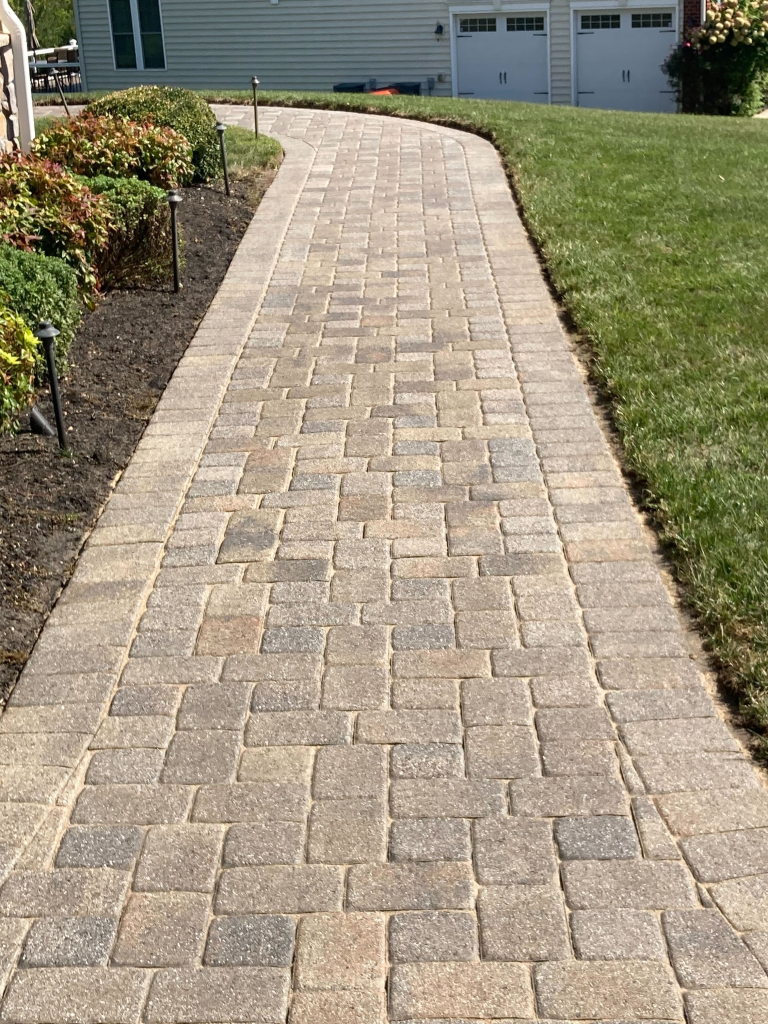
If you’ve recently installed or restored a patio, walkway, or driveway, you might be wondering, does polymeric sand actually harden?
The short answer is yes.
Polymeric sand hardens when it’s properly activated with water and allowed to cure in the right conditions.
But if moisture, temperature, or drainage aren’t right, it can stay soft, wash out, or fail to set entirely.
Below, we’ll explain how polymeric sand hardens, what affects the process, what to do if yours didn’t harden the way it should and how Clean My Pavers can help with paver joint re-sanding.
Quick Answer
Yes, polymeric sand hardens when activated with water.
It typically sets in 24 hours for patios and walkways and about 48 hours for driveways.
If it doesn’t harden, it’s usually due to rain, poor drainage, or incorrect watering during installation.
What Is Polymeric Sand?
Polymeric sand is a blend of fine sand and polymer additives.
When water is applied, those polymers activate and bind the sand particles together.
Once cured, the result is a semi-rigid joint that locks your pavers in place, resists weeds, and prevents erosion.
Unlike regular sand, it won’t wash out with the first storm, but it does require careful installation to harden properly.
How Does Polymeric Sand Harden?
Polymeric sand hardens through a simple activation process.
When you lightly mist it with water, the polymers form flexible bonds between grains of sand.
As the water evaporates, the joint cures and hardens.
Typical curing timeline:
- Patios and walkways: 24 hours before walking
- Driveways or high-traffic areas: 48 hours before driving
Avoid rain or heavy watering during this time.
Too much water before curing can ruin the hardening process and too little can leave the joints soft in the middle.
What Conditions Are Needed for It to Harden?
To ensure polymeric sand hardens correctly, every part of the environment and process must align.
Here’s what matters most:
- Dry surface before watering: Damp pavers can activate the polymers too early.
- Proper watering: Mist evenly; don’t soak. Over-watering can wash the sand out, while under-watering only hardens the top layer.
- Joint depth and fill level: Fill joints to about ⅛” below the paver edge. Too shallow or too deep can trap moisture.
- Good drainage: Standing water prevents the sand from curing and causes soft joints.
- Ideal weather: Install when temperatures are above 32°F with no rain for 24–48 hours.
Why Polymeric Sand Sometimes Doesn’t Harden
Even small mistakes during installation can prevent polymeric sand from hardening.
If your joints are still soft or washing out, one of these might be the culprit:
| Problem | Likely Cause | Fix |
| Sand stays soft | Too much water or poor drainage | Let dry, remove soft sand, and reapply |
| Sand crusts only on top | Underwatering | Mist again evenly to activate all layers |
| White haze on surface | Overwatering or residue | Lightly rinse and brush away after curing |
| Sand never sets | Rain too soon after install | Remove and replace with new polymeric sand |
| Sand eroding from joints | Insufficient fill depth or loose base | Re-sand pavers and compact properly |
If your sand never hardened, you can’t salvage it by simply adding water later.
You’ll need to remove it, clean the joints, and reapply fresh polymeric sand under dry conditions.
How Long Does Polymeric Sand Stay Hardened?
When applied correctly, polymeric sand joints can last 3–10 years depending on traffic and weather.
However, no joint material lasts forever, freeze–thaw cycles, pressure washing, and heavy rain gradually break it down.
To extend lifespan:
- Keep the surface free of debris and standing water.
- Top off any washed-out joints.
- Reseal the surface every few years to lock in the sand.
- Have a professional inspect or re-sand joints as needed.
Polymeric Sand vs. Regular Joint Sand
| Feature | Polymeric Sand | Regular Joint Sand |
| Hardens after watering | Yes | No |
| Resists weeds & ants | Yes | No |
| Prevents wash-out | Excellent | Poor |
| Maintenance frequency | Low | High |
| Cost | Slightly higher | Lower |
Polymeric sand is more expensive upfront, but it provides a cleaner, more durable finish that holds up through Pennsylvania’s freeze–thaw seasons.
Southeastern PA Weather and Installation Challenges
In Southeastern Pennsylvania, our humid summers, cold winters, and unpredictable rain make polymeric sand installation tricky.
High humidity can slow curing, and sudden rain can wash sand out before it hardens.
That’s why timing and technique matter, you need dry conditions, even watering, and solid drainage underneath.
Local pros like Clean My Pavers understand the unique weather challenges in this region and how to work around them for long-lasting results.
How Clean My Pavers Can Help with Paver Joint Re-sanding
If your polymeric sand didn’t harden or your patio joints have eroded over time, Clean My Pavers can help.
Our paver joint re-sanding Service in Southeastern PA includes:
- Full removal of old or failed sand
- Deep joint cleaning to eliminate residue and debris
- Application of high-quality polymeric sand formulated for local weather
- Proper misting and curing to ensure full hardening
- Optional sealing to protect against future erosion
Our trained technicians ensure your joints harden the way they should, no soft spots, no washout, no frustration.
We use professional-grade equipment and sand blends designed for the specific freeze–thaw patterns of the region, helping your hardscape look sharp year-round.
Key Takeaway: Does Polymeric Sand Harden
So, does polymeric sand harden?
Yes, when installed correctly.
It needs a dry base, proper water activation, and time to cure.
When done right, it locks your pavers tight, resists weeds, and looks great for years.
If yours never hardened or is breaking down, Clean My Pavers can restore your patio or driveway with professional paver joint re-sanding, ensuring your surface looks and performs like new again.
FAQs: Does Polymeric Sand Harden
How long does it take for polymeric sand to harden?
Polymeric sand typically takes about 24 hours to harden for patios and walkways, and up to 48 hours for driveways or areas with heavier traffic. During this curing period, it’s important to keep the surface dry and avoid foot or vehicle traffic so the sand can fully set.
Does water penetrate through polymeric sand?
Yes, water can penetrate through polymeric sand to a degree. Once cured, the joints are semi-permeable — they allow minimal water to pass through while preventing erosion and washout. This helps maintain good drainage without letting large volumes of water loosen the joints.
What is the downside to polymeric sand for pavers?
The main downside is that polymeric sand requires careful installation. Too much or too little water, poor drainage, or rain during curing can prevent it from hardening properly. It’s also slightly more expensive than regular sand, though the long-term durability usually makes up for the cost.
How do you re-sand patio pavers?
To re-sand pavers, first remove any loose debris or remaining sand from the joints using a pressure washer or joint cleaner. Once the area is completely dry, sweep new polymeric sand into the joints until they’re filled about ⅛ inch below the paver surface. Mist lightly with water to activate the polymers, and allow 24–48 hours to harden.
What’s the best sand to use for pavers?
The best sand for most modern hardscapes is polymeric sand. It offers superior stability, resists weeds and insects, and prevents washout during heavy rain. For older or low-traffic installations, regular jointing sand can work, but it requires more frequent maintenance and reapplication.
How do you apply polymeric sand for pavers?
Start by ensuring the paver surface and joints are dry. Pour the polymeric sand over the area, then sweep it into the joints using a broom until they’re filled evenly. Compact the pavers to settle the sand, then lightly mist the surface with water to activate the polymers. Avoid over-watering or walking on the area for at least 24 hours to let the sand cure properly.