
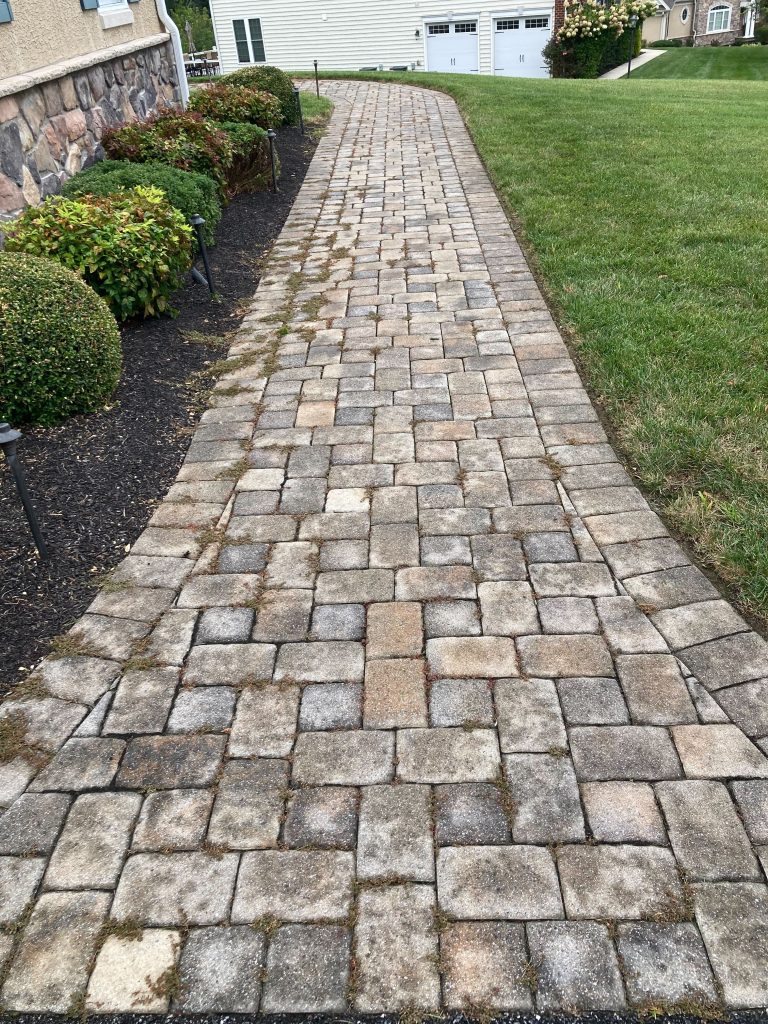
Stains on natural stone can be frustrating.
Whether it’s a dark oil spot on your patio, rust marks under metal furniture, or discoloration from leaves and algae, cleaning natural stone requires more care than most people realize.
The safest way to get stains out of natural stone is to identify the stain first, then use a stone-safe, pH-neutral cleaner or poultice designed for that specific issue, never acidic or abrasive products.
Using the wrong method can permanently damage the surface.
This guide explains how to remove stains safely, what to avoid, and when professional stone cleaning makes sense.
Quick Summary: How to Remove Stains from Natural Stone
- Identify the type of stain
- Choose a stone-safe cleaning method
- Avoid acidic or abrasive cleaners
- Rinse thoroughly and allow the stone to dry
- Consider professional cleaning if stains remain
Why Natural Stone Stains So Easily
Natural stone like limestone, travertine, bluestone, slate, and marble is porous.
Instead of sitting on the surface, liquids can soak into the stone and become trapped below.
Because of this, stains can:
- Darken the stone unevenly
- React with minerals in the stone
- Become difficult, or impossible, to remove with household cleaners
That’s why stain cause matters more than how the stain looks.
Step One: Identify the Type of Stain
Before cleaning, take a moment to determine what caused the discoloration.
Treating the wrong type of stain often leads to poor results or surface damage.
Common Natural Stone Stains
- Organic stains: Leaves, mulch, algae, food, bird droppings
- Oil-based stains: Grease, cooking oil, sunscreen, automotive fluids
- Rust stains: Metal furniture, fertilizer, irrigation water with iron
- Hard water stains: Mineral buildup or chalky residue
- Biological stains: Mold, mildew, moss
If you’re unsure, always test any cleaner in a small, hidden area first.
How to Get Stains Out of Natural Stone (By Stain Type)
Let’s look at how you can get each type of stain out of natural stone:
Organic Stains (Leaves, Dirt, Algae)
- Use a pH-neutral stone cleaner and warm water
- Gently scrub with a soft brush
- Rinse thoroughly and allow the stone to dry
On outdoor stone, sunlight often helps fade remaining discoloration once the surface is clean.
Oil-Based Stains (Grease, Food, Automotive Fluids)
- Blot excess oil, do not rub
- Apply a stone-safe poultice designed to pull oil from the pores
- Let it sit as directed, then remove gently
Oil stains may require more than one application, especially on older or unsealed stone.
Rust Stains
- Use a stone-specific rust remover only
- Avoid household rust removers or acids
- Rinse thoroughly after treatment
If rust stains return, address the source, such as metal furniture or irrigation overspray.
Hard Water and Mineral Stains
- Do not use vinegar or acidic cleaners
- Use a cleaner formulated for mineral buildup on natural stone
- Work slowly and gently, force can damage the surface
These stains are common around pools, fountains, and sprinkler systems.
Mold, Mildew, and Biological Growth
- Use a stone-safe biological cleaner
- Allow proper dwell time so the cleaner can work
- Rinse thoroughly and improve airflow or drainage where possible
What’s the Best Way to Clean Natural Stone Without Damaging It?
The safest approach is always the gentlest one.
When cleaning natural stone, stick to:
- pH-neutral stone cleaners
- Soft nylon brushes or microfiber pads
- Low-pressure rinsing
- Allowing the stone to dry between treatments
Aggressive scrubbing and harsh chemicals usually make stains worse, not better.
Cleaners and Tools to Avoid on Natural Stone
These products can permanently damage natural stone surfaces:
- Vinegar, lemon juice, or acidic cleaners
- Bleach or ammonia not labeled for stone
- High-pressure washing
- Wire brushes or abrasive pads
If a cleaner isn’t specifically labeled safe for natural stone, it’s best not to use it.
Why Some Stains Don’t Come Out With DIY Cleaning
Some stains penetrate deep into the stone or chemically bond with it.
In these cases:
- Household cleaners can’t reach the source of discoloration
- Repeated DIY attempts may cause etching or uneven color
- The surface can end up looking worse than before
This is especially common with outdoor stone that hasn’t been sealed or maintained regularly.
Should Natural Stone Be Sealed After Cleaning?
Yes.
Sealing helps reduce future staining by limiting how deeply liquids can penetrate the stone.
While sealers don’t make stone stain-proof, they provide valuable protection and make routine cleaning easier.
Outdoor stone surfaces typically benefit from periodic resealing, especially in high-traffic or moisture-prone areas.
When Professional Natural Stone Cleaning Makes Sense
Professional cleaning is worth considering if stains are:
- Deep-set or widespread
- Returning after repeated cleaning
- Located in high-visibility areas like patios or walkways
For homeowners in Southeastern Pennsylvania, Clean My Pavers offers professional natural stone cleaning for patios, walkways, pool decks, and other outdoor surfaces.
Our methods are designed to lift stains safely while preserving the stone’s natural appearance.
Final Thoughts
Knowing how to get stains out of natural stone starts with understanding the material. Identifying the stain, using stone-safe methods, and avoiding harsh cleaners can prevent permanent damage.
When stains won’t budge, or when you want to protect your stone long term, professional natural stone cleaning can restore the surface safely and effectively while preserving its natural beauty.
FAQs: How to Get Stains Out of Natural Stone
How do you get stains out of natural stone?
To get stains out of natural stone, start by identifying what caused the stain. Most stains should be treated with a pH-neutral, stone-safe cleaner or a poultice designed to draw the stain out of the stone’s pores. Harsh or acidic cleaners should be avoided, as they can permanently damage the surface.
What is the best cleaner for natural stone?
The best cleaner for natural stone is a pH-neutral cleaner specifically labeled as safe for stone. These cleaners are designed to lift dirt and stains without reacting with the minerals in the stone or causing etching and discoloration.
What should you not use on natural stone?
You should never use vinegar, lemon juice, bleach, ammonia, abrasive powders, wire brushes, or acidic household cleaners on natural stone. These products can etch the surface, dull the finish, and make stains more noticeable over time.
Can you remove a stone stain after it’s set?
Yes, many set-in stone stains can still be removed, but it often requires more time, repeated treatments, or professional cleaning. Deep stains that have penetrated the stone may not respond to basic DIY methods and can worsen if treated incorrectly.
Does natural stone stain easily?
Natural stone can stain easily because it is porous. Liquids like oil, water, and organic matter can seep below the surface if the stone is not properly sealed or maintained, making stains more difficult to remove once they set.
Can you power wash a stone patio?
You can power wash a stone patio, but only at low pressure and with proper technique. High pressure can damage the stone surface, loosen joints, and force water deeper into the stone, leading to long-term issues.
What can you use to clean a stone patio?
A stone patio should be cleaned with a pH-neutral stone cleaner, soft brushes, and gentle rinsing. For tougher stains, stone-safe poultices or professional cleaning methods may be needed to avoid damaging the surface.