
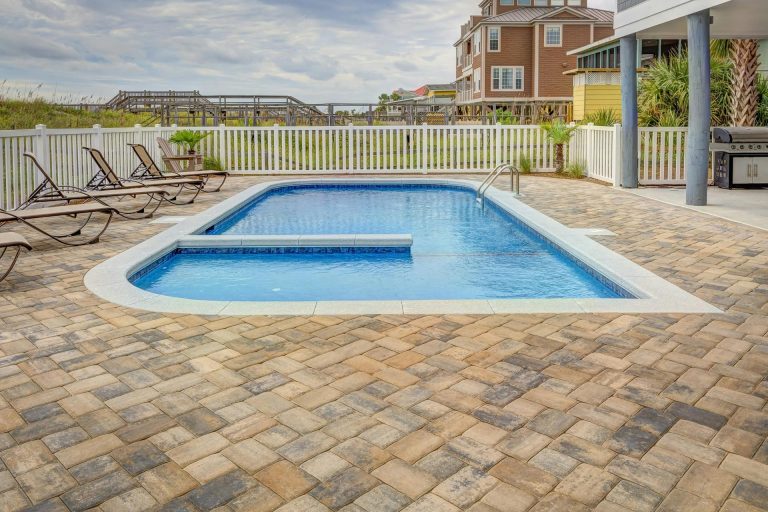
Keeping your concrete or paver patio looking great year after year doesn’t have to feel like a chore.
With the right routine, you can protect your investment, avoid costly repairs, and make your outdoor space a place you actually enjoy spending time.
This guide will walk you through everything you need to know about patio maintenance, from quick weekly care to seasonal deep cleans, so your pavers stay clean, safe, and beautiful.
Why Patio Maintenance Matters
Your patio isn’t just a slab of stone or concrete, it’s where you host BBQs, enjoy your morning coffee, and make memories with family and friends.
But over time, dirt, weeds, moss, and weather can break it down.
Proper maintenance:
- Keeps it looking fresh and inviting
- Prevents trip hazards like loose pavers or slippery moss
- Protects it from long-term damage, which saves you money
Tools and Materials You’ll Need
Having the right supplies on hand makes patio maintenance faster and easier:
- Stiff-bristle broom or leaf blower
- Garden hose or pressure washer
- Mild, paver-safe cleaner (eco-friendly options recommended)
- Bucket and scrub brush
- Polymeric sand for joint filling
- Sealant and applicator (roller or sprayer)
- Protective gloves and safety glasses
A Simple Patio Maintenance Schedule
Let’s look at a simple paver patio maintenance schedule you can use to keep your patio looking its best:
Weekly Care
- Sweep or leaf-blow debris so it doesn’t stain or trap moisture
- Do a quick walk-around to spot weeds, moss, or damage early
Monthly or Seasonal Care
- Lightly rinse with a garden hose or soft wash to keep dirt from building up
- Check for standing water or poor drainage, both can cause paver shifting
Deep Cleaning Your Patio
Sometimes a rinse isn’t enough.
For deep cleaning:
- Soft washing is gentle and ideal for sealed patios or delicate stone
- Pressure washing can restore a like-new look but needs to be done carefully to avoid damaging the surface or joints to avoid having to re-sand the joints.
Safe and Effective Cleaners
- Eco-friendly options protect plants and pets (great for flower-filled yards)
- Avoid harsh chemicals like bleach or vinegar on certain stones, they can discolor or weaken the surface
Stubborn Stains
- Oil stains: use an absorbent material like baking soda before washing
- Rust: specialized rust remover for pavers works best
- Organic stains: a mild soap and water mix can do wonders
Cleaning Tips by Material Type
Let’s look at some tips for specific types of patio materials:
- Concrete pavers: Durable but porous, sealing concrete helps prevent deep staining
- Natural stone: Use pH-neutral cleaners to avoid etching
- Brick: Avoid overly strong pressure washing to prevent surface wear
- Travertine or limestone: Skip acidic cleaners like vinegar, which can damage the surface
Preventing and Removing Weeds, Moss, and Algae
Weeds and moss love the tiny gaps between pavers.
To fight them:
- Pull weeds by the roots to keep them from growing back
- Use a safe moss/algae cleaner or vinegar solution (only if your paver material can handle it)
- Install polymeric sand between joints, it locks in place and discourages weed growth
- Improve sunlight exposure and drainage to make the area less inviting for moss
Repairing and Replacing Damaged Pavers
Small problems can turn into big ones if ignored.
It’s better to repair pavers before they end up needing to be replaced
Look out for these issues:
- Cracked or chipped pavers
- Sunken areas where water collects
- Loose joints that wiggle underfoot
If it’s a minor issue, you can often swap a paver yourself.
But for bigger repairs, calling a pro like Clean My Pavers ensures the job is done right.
Patio Joint Care and Resanding
The sand between your pavers does more than fill gaps, it keeps everything stable and prevents weed growth.
- Polymeric sand hardens when wet, making it more resistant to washouts and weed intrusion
- Reapply sand after deep cleaning pavers or pressure washing to keep joints solid
Patio Sealing for Protection and Longevity
If water no longer beads up on the surface, it’s time to reseal your pavers.
Most patios need sealing every 2–3 years, depending on traffic and weather.
Choosing the Right Sealer
- Gloss for a wet, shiny look
- Matte for a more natural finish
- Breathable sealers are best for preventing trapped moisture
Sealing Tips
- Always clean thoroughly before sealing
- Apply evenly with a sprayer or roller
- Give it enough drying time before walking or placing furniture back
Seasonal Patio Maintenance Tips
Let’s take a look at some basic seasonal or annual maintenance tips you can use to keep your patio looking great:
Spring & Summer
- Wash away winter grime
- Reseal if needed before heavy foot traffic season
Fall
- Keep leaves cleared to avoid staining
- Fill any gaps before freeze-thaw cycles start
Winter
- Use a plastic shovel to avoid scratching pavers
- Avoid salt-based ice melt on certain stones, it can cause damage
What are Common Patio Maintenance Mistakes to Avoid
Here are some of the most common patio maintenance mistakes you want to avoid:
- Overusing pressure washers and blasting away joint sand
- Using bleach or vinegar without knowing your patio’s material
- Skipping sealing altogether
- Waiting too long to address cracks or loose pavers
How Clean My Pavers Can Help With Patio Maintenance
Patio maintenance is easier when you have experts on your side.
At Clean My Pavers, we specialize in professional patio cleaning, sealing, and repair your pavers.
We use eco-friendly products, proven techniques, and years of experience to keep your patio looking its best, without you having to spend your weekends scrubbing or sealing.
We also provide tailored advice based on your patio’s material so it lasts for decades.
Ready to give your patio the care it deserves?
Contact us today for a free quote and let us handle the hard work.
FAQs: Patio Maintenance
How do you maintain a patio?
Regular maintenance includes sweeping away debris weekly, rinsing the surface monthly, removing weeds or moss promptly, and scheduling a deep clean at least once a year. Sealing every few years also helps protect the surface.
How often should you seal your patio?
Most patios need sealing every two to three years, but high-traffic areas or harsh climates may require more frequent applications.
Is it okay to pressure wash a paver patio?
Yes, but it’s important to use the correct pressure and technique to avoid damaging the surface or washing away the joint sand.
Is there a downside to sealing pavers?
If applied incorrectly, sealers can leave a cloudy finish or trap moisture. Choosing the right type and prepping the surface properly avoids these issues.
What is the lifespan of a patio?
With proper maintenance, a patio can last 25 to 50 years, depending on the materials and climate conditions.
How long do pavers last?
Quality pavers can last 30 years or more if regularly cleaned, sealed, and repaired as needed.
How do you clean pavers?
Start by sweeping away debris, then wash with water and a paver-safe cleaner. For stubborn stains, use a spot treatment before rinsing.
How do you seal pavers?
Clean and dry the surface thoroughly, apply the sealer evenly with a roller or sprayer, and allow it to cure fully before using the patio again.